
Introduction
Sun exposure is mandatory to get vitamin D and for the overall well-being of humans. The warmth of the sun rays feels relaxed and exciting during winter, whereas harsh in summer. Irrespective of the season, prolonged exposure to UV rays from the sun definitely harms your skin, leading to sun damage. Though “sun-damaged skin” is a common concern, yet underestimated skin concern. This sun damage can result in premature ageing, wrinkles, pigmentation, and, in severe cases, it can lead to skin cancer as well. Sun damage affects your skin health at various levels.
This blog explores sun-damaged skin, its visible signs, prevention strategies, treatment options to cure damaged skin from sun rays, and restore healthy skin.
What is Sun-Damaged Skin?
Sun damaged skin is widely known as “Photoageing”.
This skin condition results due to prolonged and repeated exposure to ultra violet radiations (UVA and UVB) from the sun. These UV rays penetrate deep through the skin layers, damaging skin elasticity and collagen. As a result, skin undergoes premature ageing, pigmentation, wrinkles, and loses skin elasticity over time. This is known as photoageing.
Photoageing also increases the risk of sun cancer. It is also known by several other names, including photodamaged skin, solar damage, extrinsic ageing, and dermatoheliosis.
Sun damage doesn’t occur overnight. It develops gradually, starting from early teens and starts getting more noticeable at the later stages of life.
Visible Signs of Sun Damaged Skin
Identifying sun damaged skin at an early stage helps in preventing further complications. A few common visible signs to look out for, include:
-
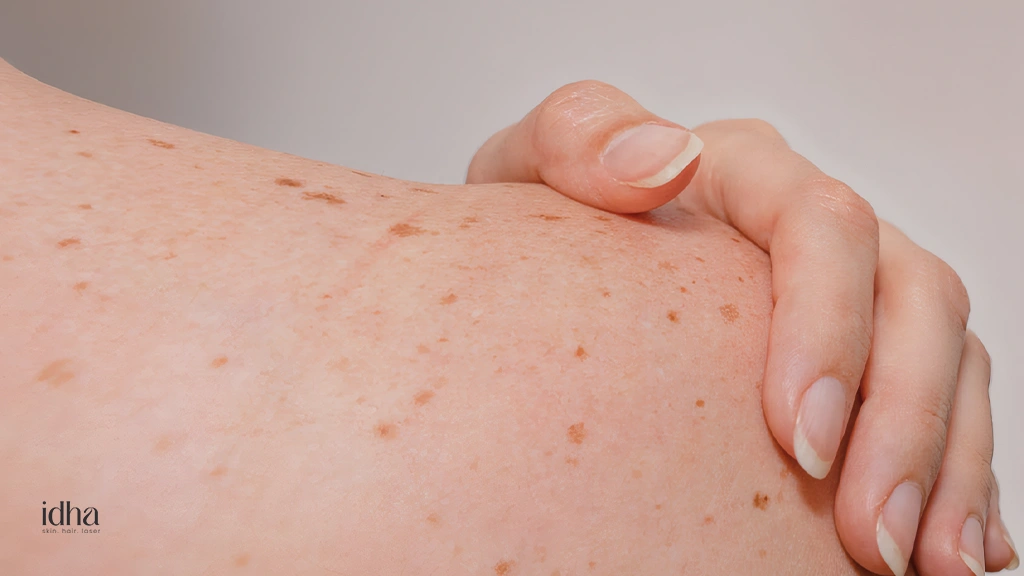
Pigmentation and Dark Spots
Uneven skin tone is the first sign of sun damaged skin. The skin produces melanin to protect from the harmful effects of sun rays. However, prolonged exposure to sun rays increases the production of melanin, further leading to premature ageing, dark spots, and uneven skin tone. Dark spots and pigmentation occur as patches on skin that are much darker than your natural complexion and are not itchy or painful.
-
Enlarged Pores
Chronic exposure to UV rays breaks down skin elastin and collagen, causing skin to lose its firmness and become saggy. Thus, makes the skin pores more visible and noticeable.
-
Spider Veins
Frequent exposure to sun rays increases the appearance of spider veins, especially around the nose and cheeks. It appears as flat or slightly raised lined, usually painless, but occasionally itching or mild burning. Sun rays weaken the blood vessel walls and become thinner, thereby making the spider veins more visible.
-
Wrinkles and Fine Lines
Exposing skin to UV rays for a prolonged duration breaks down collagen and elasticity of the skin. You will gradually start noticing the appearance of premature ageing, fine lines, wrinkles, and crow’s feet.
-
Rough Texture and Dryness
Sun damaged skin often feels dry, rough, and tight due to damaged skin barrier, which prevents moisture retention.
Causes of Sun Damaged Skin
Understanding the major factors contributing to sun damaged skin helps in taking preventive measures and treatments according to the prevalence of the skin concern-
-
Lack of Protection
Skipping or neglecting the use of sunscreen or using low SPF products accelerates the penetration of UV rays deep into skin, further resulting in damage.
-
Prolonged UV Exposure
One of the primary causes for sun damaged skin is spending longer hours outdoors without adequate sun protection.
-
Environmental Factors
Alongside UV exposure, pollution can increase oxidative stress on the skin and gradually showcase the visible signs of sun damage.
-
Artificial UV Sources
Artificial UV sources, like sun lamps and tanning beds, emit UV radiations that are equally harmful as natural UV rays. This causes skin damage and accelerates the ageing process.
Skin Treatment Options
Although the signs of sun damaged skin or photoageing can’t be completely reversed, with the best professional treatments can rejuvenate your skin. Here are a few treatment options to consider as per your prevailing skin concern:
-
Chemical Peels
Chemical peels help to remove the outermost damaged skin layer and promote the growth of new skin cells. This chemical peeling improves skin tone and texture.
-
Photodynamic Therapy
Photodynamic therapy is used in case of severe sun damage and to destroy pre-cancerous cells, leaving behind the normal cells. In this therapy, a medication is applied on the skin and a red/blue fluorescent light is used to activate the medication.
-
Laser Therapy
Laser treatment targets treating skin pigmentation, wrinkles, uneven skin texture, and fine lines. The process removes the top damaged skin layer and increases collagen production.
-
Microdermabrasion
Microdermabrasion is an invasive cosmetic procedure that exfoliates the outer layer of the skin using a diamond-tipped wand or tiny crystals. This procedure lasts for about 30-40-minute sessions. It improves skin texture, tone, acne scars, wrinkles, and reduces fine lines.
-
Topical Treatments
Topical medications, like retinols and retinoids under dermatologists guidance, can be used to treat age spots, fine lines, wrinkles, and roughness of the skin by stimulating collagen. It removes the old cells and stimulates the growth of new skin cells.
Tips to Prevent Sun Damaged Skin
It’s a well-known proverb that “Prevention is always better than cure”. It is better advised to take preventive measures to protect the skin damage from sun rays. Here are a few preventive measures to consider:
-
Using a Broad Spectrum Sunscreen
Applying sunscreen is not limited to the scorching summer season. Consider applying SPF30+ regularly even on cloudy days. While you are outdoors, reapply sunscreen every 2-3 hours.
-
Avoid Peak Sun Hours
Avoid or limit going out under sun exposure between 10 am to 4 pm, unless it is inevitable.
-
Maintain a Skincare Routine
Having a consistent skincare routine is essential for a nourishing and healthier skin. Cleanse, moisturize, and use sunscreen to maintain skin health.
-
Wear Protective Clothing
In addition to sunscreen, wear a hat, sunglasses, and long-sleeved hand gloves for added protection.
When to Visit a Dermatologist
Consult a dermatologist, if you start noticing:
- Persistent acne
- Acne scars
- Moles
- Changed patch of skin
- Rashes and itching
- Severe pigmentation issue
- Non healing skin lesions
- Hair loss, nail disorders, and skin infections
It is always recommended to go for an annual skin examination to avoid serious complications.
Final Thoughts
The effects of sun damage to skin are not completely reversible. With timely care and professional dermatologist consultation, its effects can be reduced. However, choosing the right treatment according to your prevailing skin condition, helps to restore healthier skin. Additionally, combining professional medical treatments with preventive measures, such as using sunglasses, a hat, and full sleeve hand gloves, ensures long term protection. Investing in sun protection gives you radiant and healthier skin in the years to come.